A digital suggestion box: honest ideas from guests who would never complain
Why an anonymous suggestion box surfaces ideas that ratings and reviews miss, what to ask, and how to act on what guests tell you.
· 2 min read · Tapstand team
Ratings tell you how a visit went. They rarely tell you what guests wish you'd do: oat milk, a quieter corner, earlier opening on Sundays, a plug by the window seats. Those ideas tend to come from your nicest regulars, the people who'd never fill in a complaint form.
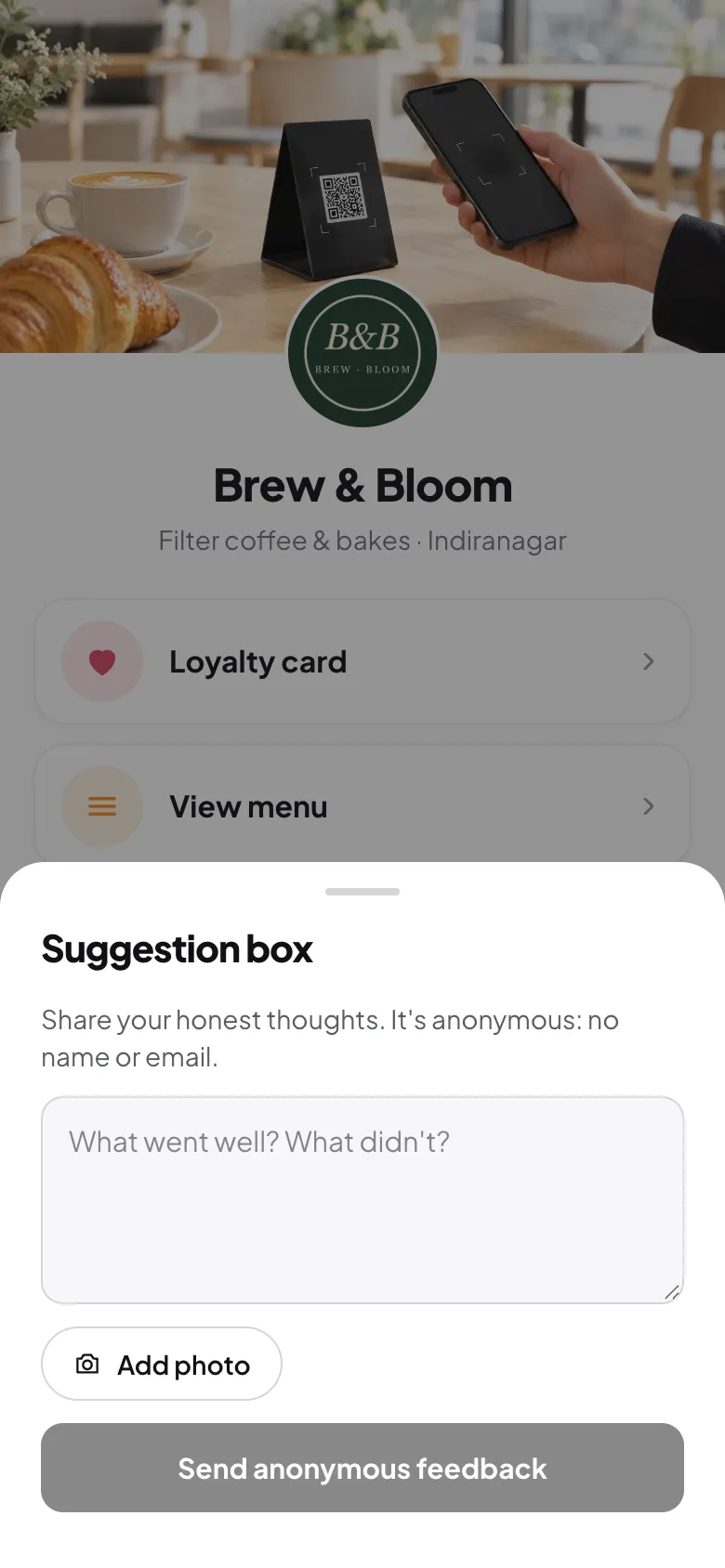
An anonymous suggestion box gives them a low-pressure way to tell you.
Why anonymous matters
- No awkwardness. Regulars don't want to seem demanding to staff they like.
- More honesty. Without a name attached, people say what they actually think.
- Different from feedback. There's no rating, so it's about ideas, not judgement.
Prompts that get useful answers
A blank box gets blank answers. Rotate a simple prompt every few weeks:
- "What's one thing we should add to the menu?"
- "What would make you visit more often?"
- "What did we get wrong that you were too polite to mention?"
- "What do you love that we should never change?"
Photos say more than words
Let guests attach a photo. A picture of a wobbly table, a dark corner or a brilliant idea from another café says more than a paragraph.
Read, sort, act
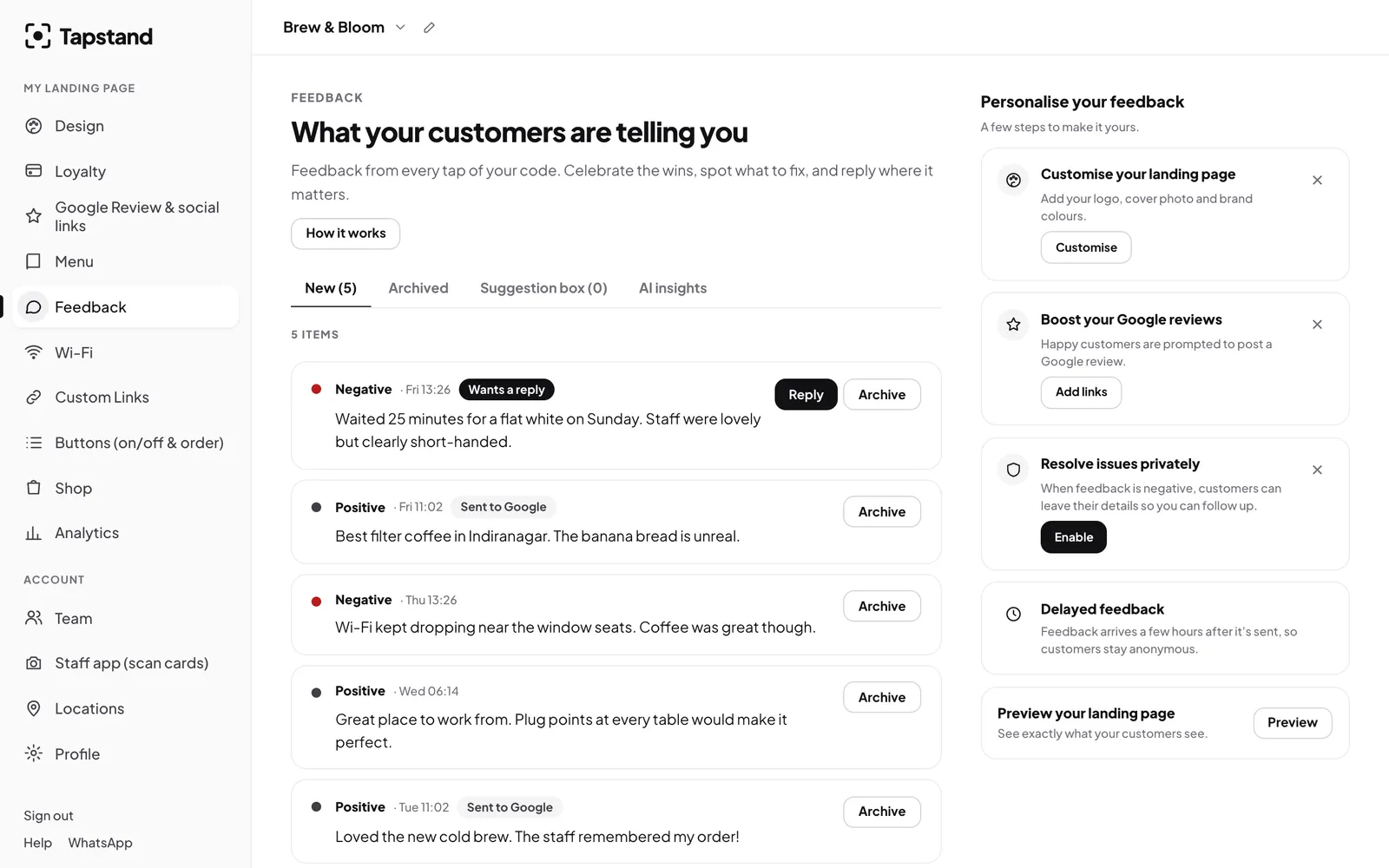
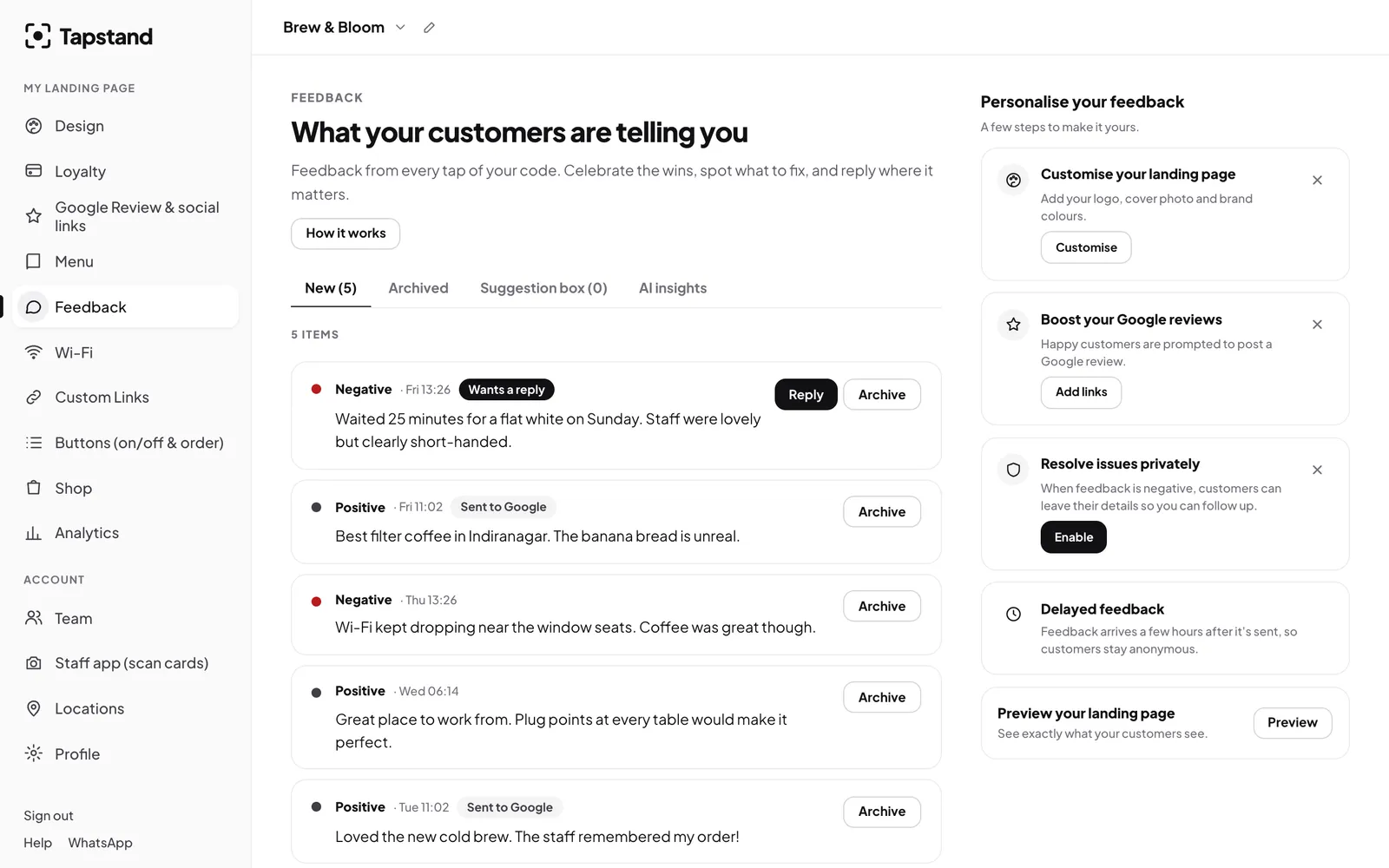
- Read weekly. Suggestions arrive in the same inbox as feedback, in their own tab.
- Sort into three piles: do now (cheap and easy), consider (needs thought or money), and no (doesn't fit you).
- Do one thing a month from the first pile, and say so publicly: "You asked for oat milk. It's here."
Turn it on only if you'll read it
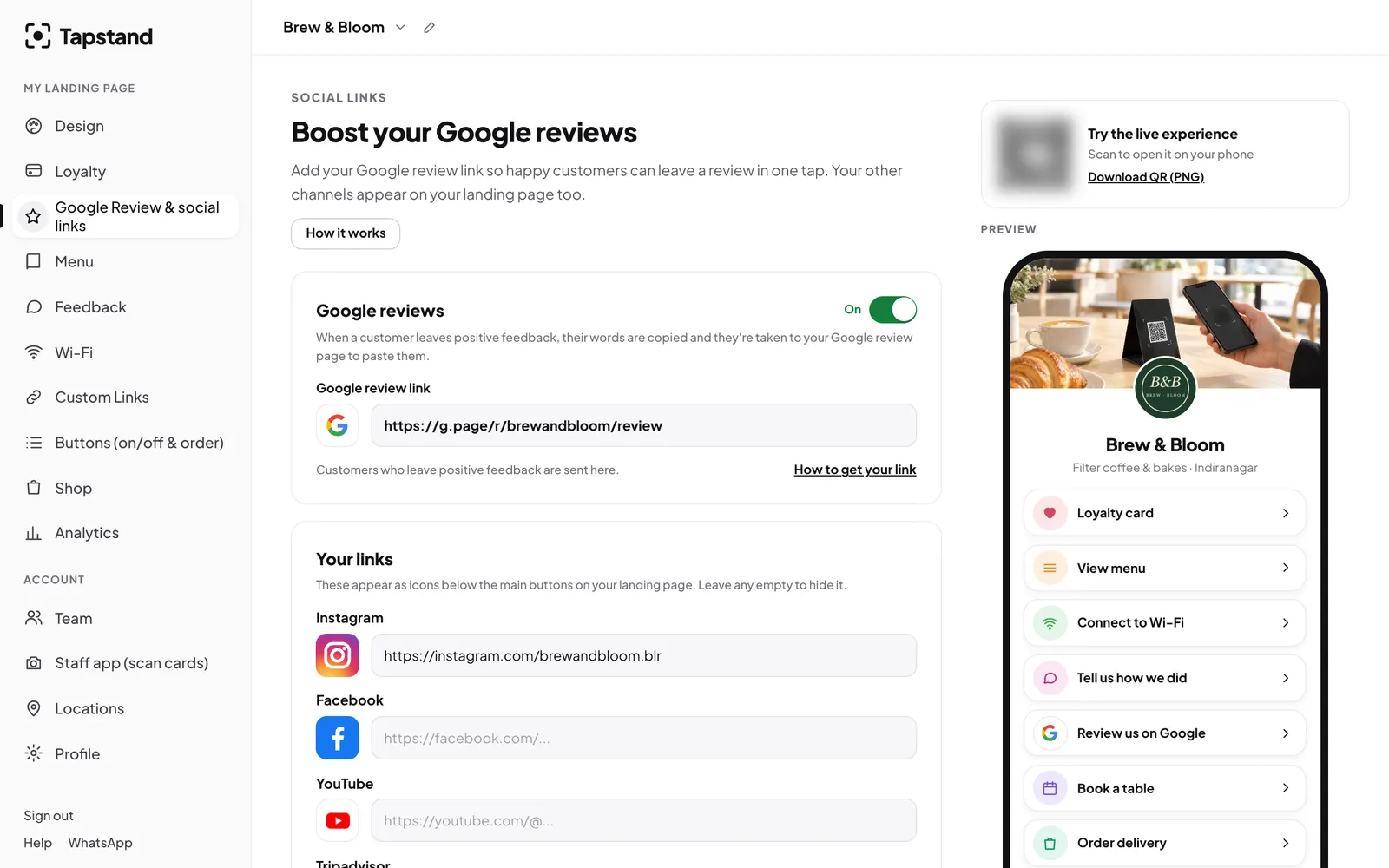
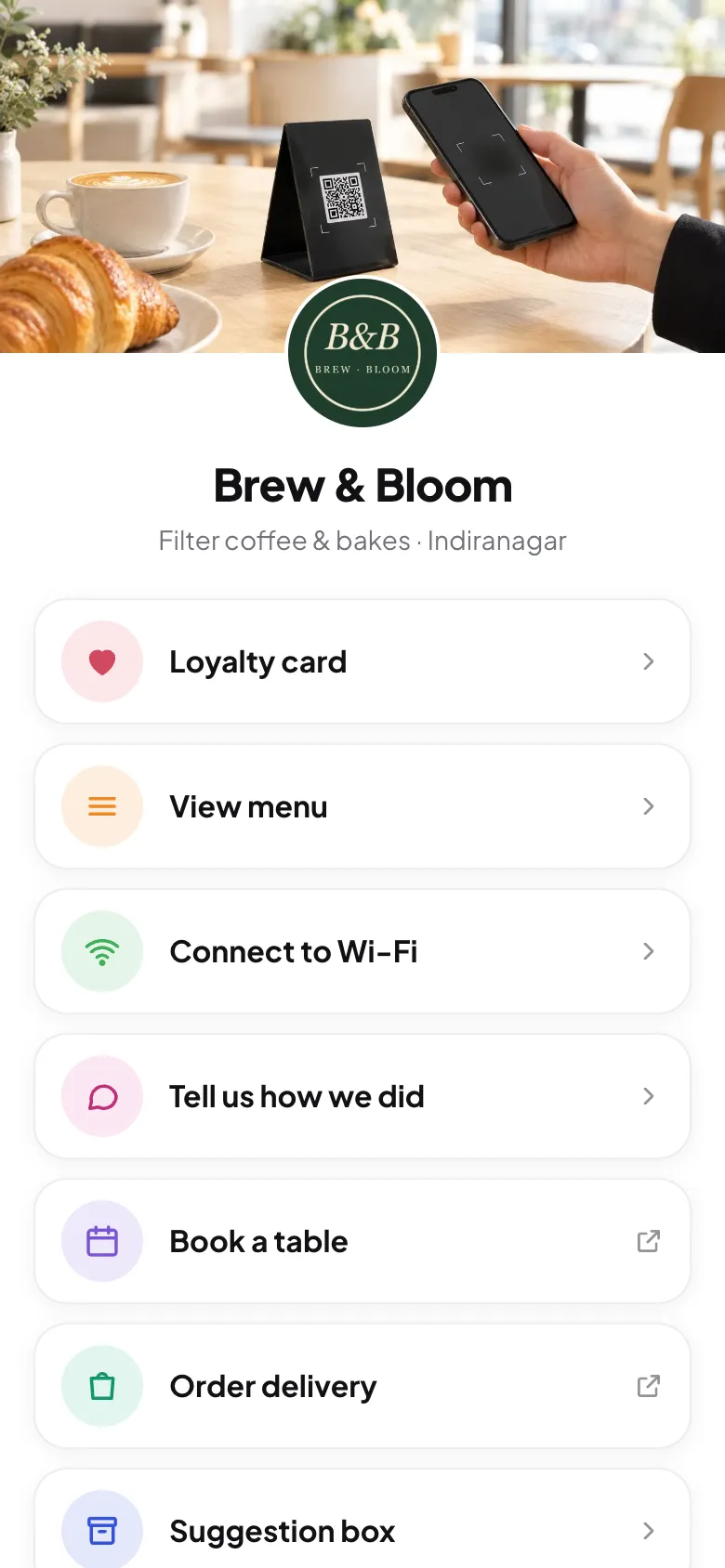
An ignored suggestion box is worse than none. If you switch it on, commit to reading it. You can choose which buttons guests see on your page and in what order; see designing your café's page.
Screenshots show Tapstand with a sample café and demo data.